
Choosing a Digital Marketing Agency in Vancouver should make running your business easier. Yet, for many owners, the process creates more confusion. Every agency seems to offer SEO, paid ads, social media, web design, email marketing, and a mysterious “growth strategy” wrapped in an attractive proposal.
The challenge is not finding an agency. Vancouver has plenty of them. The real challenge is identifying which team understands your business, respects your time, and knows where your budget should go first.
A good agency should not simply sell more marketing. It should find the gaps between your website, advertising, analytics, content, audience, and sales process. Then it should build a practical system around the goals of your business.
That may involve Google Ads. It may involve SEO, a website redesign, Meta campaigns, LinkedIn outreach, or email automation. In some cases, the smartest recommendation is to delay advertising until the website and tracking setup are ready.
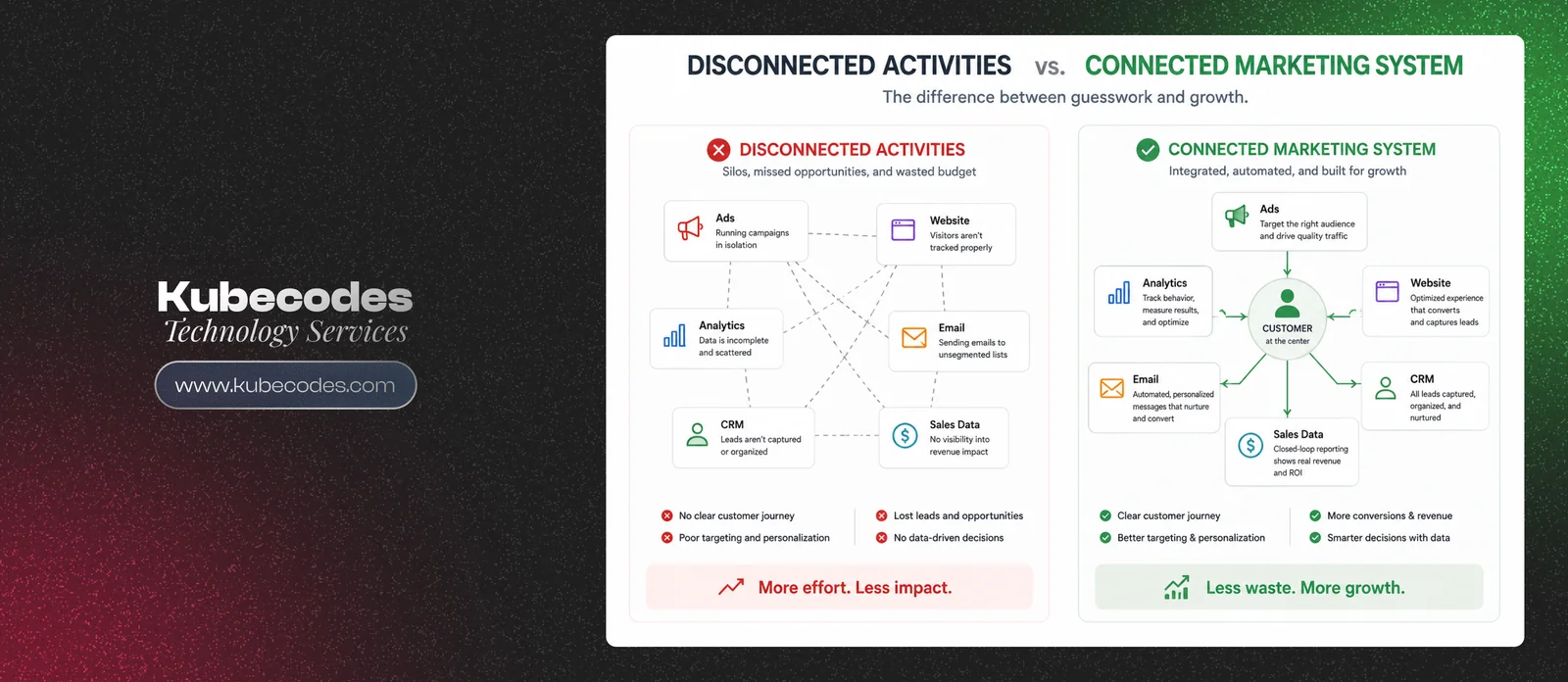
After working with more than 40 businesses over the past two years, Kubecodes has seen the same pattern repeatedly. Business owners often spend money on separate tools and channels without creating a clear connection between them. The result is activity without direction, traffic without sales, and reports that explain very little.
This guide explains how to choose a Vancouver digital marketing agency based on strategy, experience, communication, measurement, and commercial value. It will also show you which questions to ask, which promises to avoid, and how to judge whether an agency can turn attention into meaningful business growth.
“A good digital marketing agency does not waste your time. A business can recover money, but it cannot recover months spent fixing poor systems and the wrong strategy.”
Ariyan Ali, Founder of Kubecodes
 Ariyan Ali, Founder of Kubecodes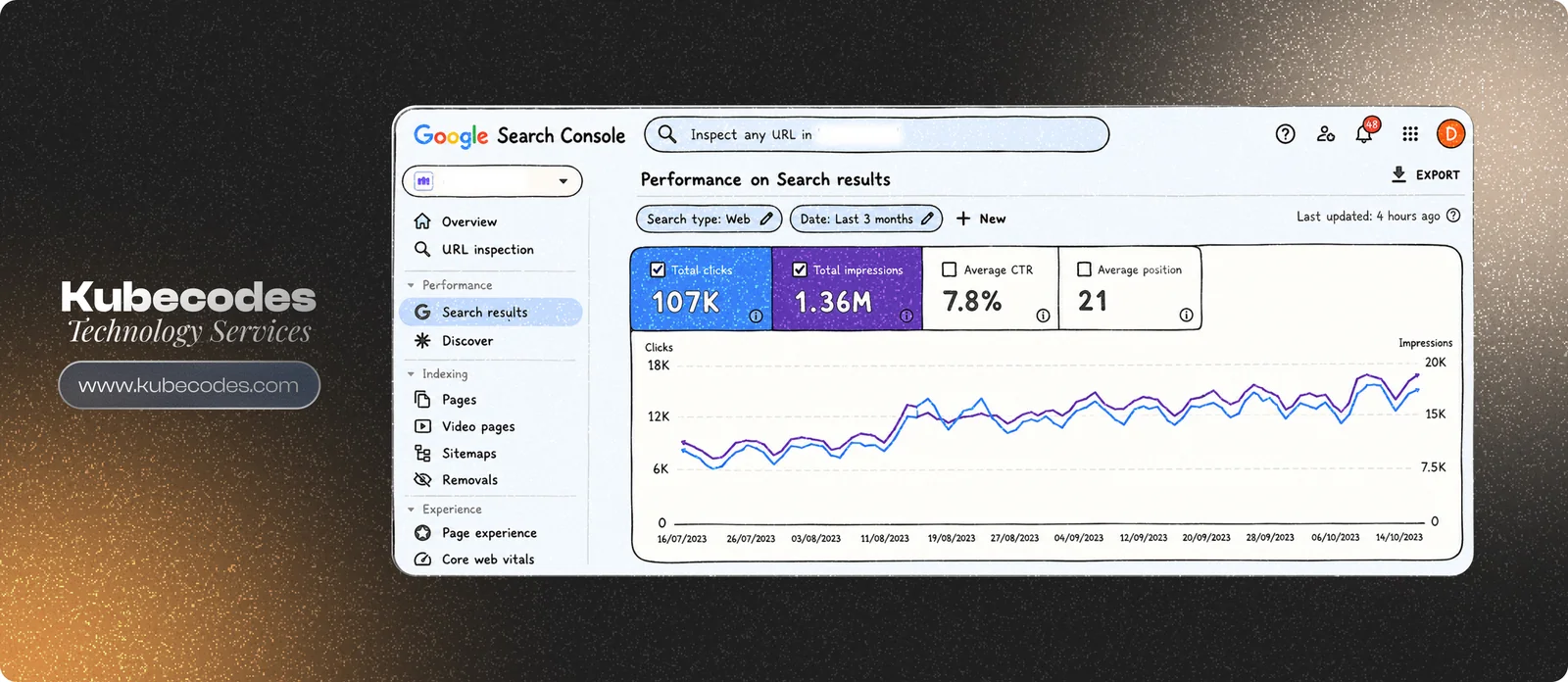
Digital Marketing Agency in Vancouver: What Should You Actually Look For?
A reliable agency should understand how your company makes money before discussing keywords, ad formats, posting schedules, or monthly packages. This sounds obvious. Still, many agency sales calls begin with services. The agency explains what it does, shows several attractive slides, and recommends a familiar package. Meanwhile, the business owner’s actual problem remains unexplored.
Perhaps the company needs more qualified leads. Maybe it receives enough leads but fails to follow up. It might have strong products but a website that makes buying difficult. It may already attract traffic but lack the analytics needed to see which channels produce revenue. These are different problems. Therefore, they require different strategies.
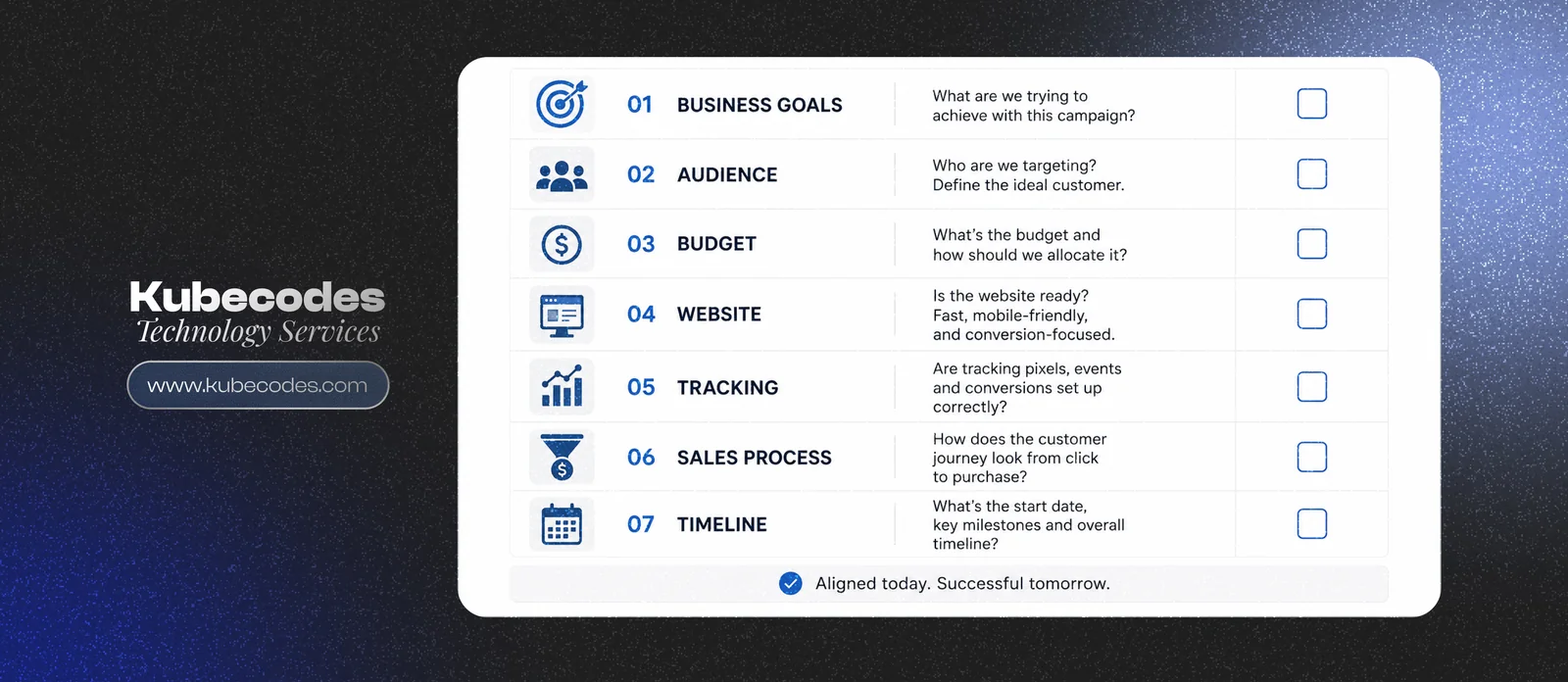
When comparing agencies, look for a team that asks about:
- Your products or services
- Your most profitable customer groups
- Your current source of leads and sales
- Your short-term and long-term goals
- Your available marketing budget
- Your timeline
- Your existing website and digital assets
- Your sales process
- Your capacity to handle more business
- Your previous marketing results
The right agency will not treat these questions as a formality. It will use the answers to decide which work should happen first.
For instance, a company with a poor checkout process may not be ready to increase advertising. Sending more visitors to a confusing website only helps more people become confused. Humanity has already produced enough efficient ways to waste money.
A capable Vancouver digital marketing agency should also explain what it will not do. This matters because honest boundaries often reveal more than a long service list.
An agency may explain that SEO cannot produce immediate results. It might recommend starting with one campaign instead of four. It may even tell the owner that the existing website needs improvement before a large advertising campaign begins.
Why Choosing an Agency Is Harder Than It Looks
Most agencies appear remarkably similar from the outside.
Their websites discuss creativity, strategy, innovation, performance, growth, and results. Their service pages list SEO, PPC, social media, branding, web design, and content. Their case studies often highlight large percentages without explaining the starting point, investment, or time required.
Consequently, business owners compare agencies by price, presentation, and confidence. Those factors matter, but they do not reveal whether an agency can solve the right problem.
A polished presentation proves that the agency can prepare a polished presentation. It does not automatically prove that it can improve your sales process, reduce customer acquisition costs, or increase qualified leads.
The best way to compare agencies is to examine how they think.
Ask each agency to explain:
- What it believes your main marketing problem is
- Which channel it would prioritize first
- Why that channel fits your audience
- What must be fixed before campaigns begin
- How success will be measured
- What could prevent the strategy from working
- What your team must provide
- How long meaningful evaluation should take
The quality of these answers matters more than the number of services listed in a proposal.
Strong agencies can explain complicated decisions in simple language. They do not hide weak reasoning behind technical terms. They should be able to tell you where the budget goes, why it goes there, and how each part contributes to the wider goal.
Meanwhile, be cautious when an agency promises certainty before it has access to your data. Marketing contains variables. Competition changes. Customer behaviour shifts. Search demand rises and falls. Creative assets perform differently than expected.
Experience helps an agency manage those variables. It does not give anyone supernatural powers, despite what certain proposals appear to suggest.
Should You Handle Digital Marketing Yourself?
Business owners can begin many digital marketing tasks themselves. There is nothing wrong with creating a Google Business Profile, opening social accounts, writing content, installing analytics, or experimenting with a small advertising campaign.
In fact, working on these tasks may help an owner understand the basics before hiring anyone.
However, the challenge grows when separate systems must work together.
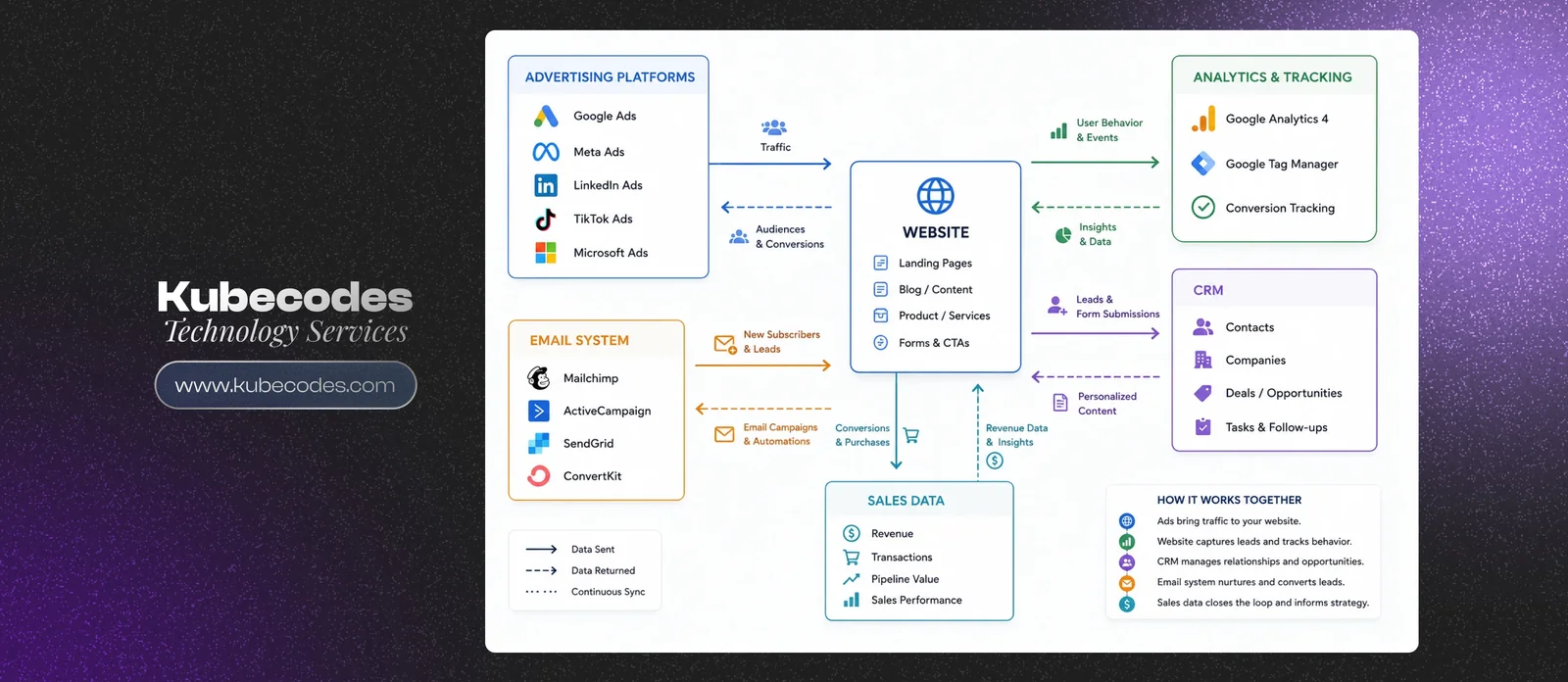
A typical business may need:
Each platform has its own settings, permissions, tags, events, and account structure. A mistake in one area can damage the accuracy of another.
For example, a website may record the same purchase twice. A contact form might submit successfully without triggering a conversion event. An advertising account may optimize for page views instead of qualified leads. Social accounts can end up tied to a former employee’s personal profile.
These problems rarely look dramatic at first. The ads still run. The website still loads. Reports still display colourful graphs. Yet the business makes decisions using incomplete or incorrect information.
That is when many owners hire an agency.
They do not hire because every task was impossible. They hire because the growing number of tasks begins consuming time that should go toward operations, customers, hiring, product development, or sales.
A strong agency should save time as well as improve marketing. Otherwise, it becomes another project for the owner to manage.
The Hidden Cost of Doing Everything Alone
The direct cost of digital marketing is easy to see. Ad spend appears on a credit card. Software sends invoices. Designers and writers charge fees.
The cost of lost time is less visible. An owner may spend evenings trying to connect tracking tools, redesign a homepage, repair social accounts, or understand why an advertising campaign is not converting. Even when the task eventually gets completed, it may have taken far longer than expected. Worse, the result may create future repair work.
At Kubecodes, we have seen businesses begin with a simple website that does not clearly explain the offer. Later, they add Google Ads, social campaigns, email tools, and analytics. Each addition sits on top of the original weakness.
Eventually, the company has traffic but poor conversion. It has analytics but unreliable events. It has social followers but no clear path from awareness to purchase.
The business then pays an agency to rebuild the same process correctly. Doing something yourself is not always cheaper. Sometimes it simply delays the full cost.
This does not mean every small company needs a large agency from day one. A new business should remain careful with cash. However, it should seek professional help when decisions affect account ownership, measurement, website architecture, advertising data, or long-term search visibility.
A one-hour consultation can prevent weeks of repair. Time is not a soft business metric. It affects speed, focus, customer service, and opportunity. Money can be earned again. A season spent working on the wrong marketing setup cannot be recovered.
Start With the Business Goal, Not the Marketing Channel
Business owners often approach agencies with a channel already in mind.
They say:
“We need SEO.”
“We should run Instagram ads.”
“We need to post more.”
“Our competitor is using Google Ads.”
“We want to go viral.”
Sometimes they are right. However, a channel is not a goal.
A better starting point is to define what the business needs to achieve. That could include generating consultations, selling products, entering a new market, increasing repeat purchases, attracting investors, improving local visibility, or building awareness before launch.
Once the goal is clear, the agency can evaluate the audience, budget, timeline, assets, and competitive environment.
For example, a local emergency service may benefit from Google Ads because customers search when they need immediate help. A furniture brand may benefit from visual Meta campaigns because shoppers respond to products shown in real spaces. A fintech company selling to senior decision-makers may need LinkedIn, useful content, direct outreach, and a longer sales process.
The channel follows the business model. That principle also prevents companies from spreading small budgets too thinly. A business with limited resources rarely needs five active channels at once. It needs one or two channels working properly, supported by a website and measurement system that can capture the results.
At the beginning of a project, Kubecodes asks the client to explain:
What Should Happen During the First Agency Meeting?
A first meeting should feel like an investigation, not a sales pitch. The agency should allow the owner to explain the business in plain terms. Then it should ask questions that uncover the commercial problem behind the marketing request.
A useful first meeting may cover the company’s history, customers, offers, margins, competitors, website, sales cycle, geographic market, and previous campaigns.
The agency should also ask what success looks like. “More traffic” is not specific enough. Does the business want more quote requests, online purchases, phone calls, booked consultations, app registrations, or qualified conversations?
Clear goals affect the campaign, landing page, tracking setup, and reporting. Budget should also be discussed directly. Avoiding the subject helps nobody. An agency cannot design a practical plan without knowing the resources available.
Likewise, the client should explain internal limits. A company may want 100 new leads but only have one employee available to respond. An ecommerce business might increase orders but lack inventory. A clinic could generate appointments but have no openings for six weeks.
Marketing does not operate separately from the rest of the company. By the end of the meeting, the agency should understand enough to recommend the next diagnostic step. That might include an audit, account review, competitor analysis, technical assessment, or strategy session.
Be cautious when an agency produces a complete recommendation within minutes. Fast answers feel satisfying, but they may show that the recommendation existed before the conversation.
Does Industry Experience Matter?
Industry experience helps an agency understand the audience, regulations, buying process, and language of a market.
Kubecodes has developed particularly strong knowledge through work involving healthcare and fintech businesses. These sectors require more than attractive advertising.
Healthcare marketing must build trust, present information carefully, and create simple paths for patients or buyers. Fintech projects often involve technical products, longer sales cycles, security concerns, and audiences that expect credibility before taking action. However, an agency does not always need an exact match to your industry.
Related experience can be valuable. An agency that understands long B2B sales cycles may adapt well across fintech, professional services, engineering, or healthcare suppliers. A team with ecommerce experience may transfer lessons between furniture, dental products, fashion, and home goods.
The important question is not simply, “Have you worked with a company exactly like mine?”
Ask instead:
A good agency should combine previous knowledge with fresh research. It should not force the same strategy onto every client in a familiar industry.
What Kubecodes Learned From More Than 40 Businesses
Over the past two years, Kubecodes has worked with more than 40 businesses across different markets and stages of growth. The most common problem has not been a lack of tools. Most companies already have access to more software, platforms, templates, and marketing advice than they can reasonably use. The problem is usually a lack of connection.
A company may have a website, but its pages do not match the advertising message. It may have social accounts, but they attract people who are unlikely to buy. It may produce content without a search strategy. It may receive leads without an email or sales process to nurture them. In other words, each part exists, but the system does not.
We have also learned that businesses often underestimate the effect of their website. Owners may focus on increasing traffic because traffic is visible and easy to discuss. Yet a stronger offer, clearer page, faster checkout, or better contact process can improve the value of every existing channel.
Another lesson is that channel selection must remain flexible. Healthcare and fintech businesses may both require trust, but the customer journey can be completely different. One may depend on local search and referrals. The other may rely on direct outreach, educational content, and several conversations before a sale.
Finally, small companies should not measure success by how busy their marketing team appears.
Ten weekly posts, four email campaigns, and three active ad platforms sound productive. However, one well-built campaign may create more commercial value. The goal is not to produce more marketing. It is to make the business easier to discover, trust, and choose.
Not Sure Where Your Marketing Budget Should Go?
Kubecodes can review your website, audience, current channels, digital assets, and available budget before recommending a strategy. The purpose is not to sell every marketing service. It is to identify what should happen first, what can wait, and where your investment has the best chance of producing results.
A Strong Agency Fixes the Foundation Before Buying Traffic
Paid traffic can expose existing problems very quickly. Suppose an ad receives clicks, but the landing page loads slowly. Visitors struggle to understand the offer. The contact form asks for too much information. Conversion tracking does not work. Follow-up emails arrive late or not at all. The advertising platform may still report traffic. Yet the business sees few sales.
Before increasing the budget, an agency should review the full path:
Ad or search result → landing page → action → confirmation → follow-up → sale
Each step matters. A foundation review may include:
Fixing these areas may not look as glamorous as launching a campaign. Nevertheless, it often determines whether the campaign succeeds.
Google itself recommends relevant landing pages for advertising performance. A visitor should arrive on a page that closely matches the search, advertisement, or offer that attracted the click.
Sending all traffic to a generic homepage is rarely ideal. A person searching for a specific service should land on a page that answers that specific need.
Why Your Website Still Controls Marketing Performance
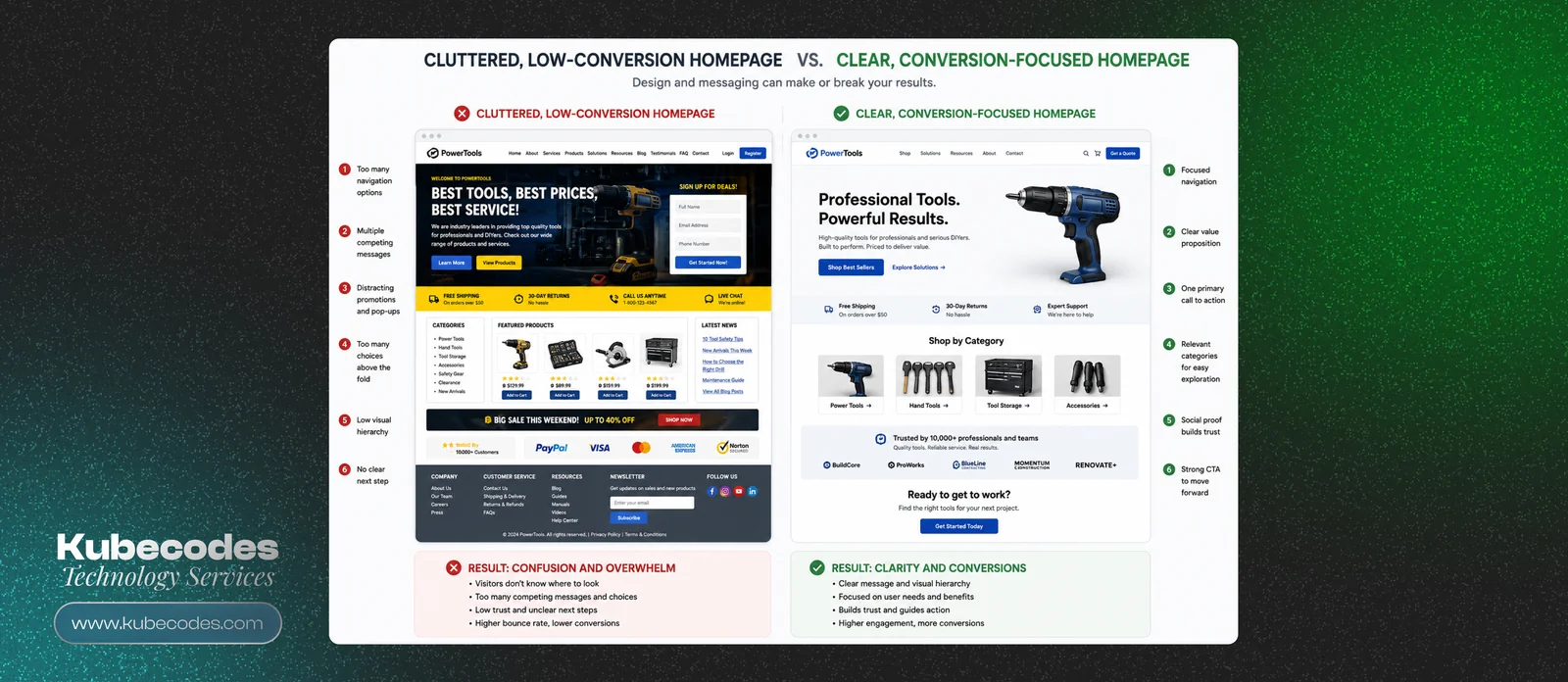
Your website is where attention becomes action. Social media can create interest. SEO can attract searches. Google Ads can capture demand. Email can bring prospects back. Still, the website often carries the responsibility of proving the company is credible and guiding the visitor forward.
A low-conversion website usually suffers from one or more simple problems:
- The offer is unclear
- The page speaks about the company instead of the customer
- The call to action is difficult to find
- The design feels untrustworthy
- The navigation has too many choices
- The mobile experience is poor
- The page lacks proof
- The checkout or form creates friction
- The content fails to answer common concerns
A redesign should not focus only on visual appearance. It should improve the path from arrival to decision. The homepage must tell visitors what the company does, who it helps, and what they should do next. Service and product pages should answer questions. Testimonials, case studies, credentials, and clear policies should reduce doubt.
This is why web design and digital marketing should not operate as separate worlds. A campaign cannot compensate forever for a weak customer experience.
Traffic Is Not the Same as Revenue
Traffic can be useful. However, it is not the final goal for most businesses. A campaign could double website visitors while producing no meaningful increase in leads or sales. In that case, the agency must investigate traffic quality, audience fit, landing-page performance, offer strength, and tracking accuracy.
Useful reporting should connect marketing activity to outcomes.
Depending on the business, those outcomes may include:
Page views, impressions, followers, and clicks provide context. They should not distract from the business objective. This is especially important when comparing channels. SEO traffic may cost less over time but take longer to build.
Paid search can create immediate visibility but requires continuing spend. Meta may generate broad awareness and retargeting opportunities, while LinkedIn may reach fewer people with greater professional relevance.
The agency should explain the role of each metric. A click is not automatically a potential customer. A lead is not automatically qualified. A sale is not automatically profitable. Good marketing follows the numbers far enough to understand the difference.
Which Agency Promises Should You Question?
Kubecodes does not promise immediate sales or dramatic traffic growth in a short period. An agency can improve the probability of success. It can research the audience, build campaigns, create better pages, install reliable tracking, test messages, and respond to data. It cannot control every variable.
Be cautious of promises such as:
- Guaranteed first-page rankings
- Guaranteed sales
- Instant organic traffic
- A fixed return before any data exists
- Viral social growth
- Hundreds of qualified leads at an unusually low cost
- Specific revenue without discussing margins or conversion
- Permanent results from a short campaign
SEO timelines depend on competition, website condition, content quality, authority, and technical factors. Advertising depends on demand, budget, targeting, creative work, competition, and landing pages. Even a strong plan needs testing.
An honest agency should provide expectations, not fantasies. It can share likely timelines, benchmarks, possible scenarios, and previous experience. It should also explain the risks. That may sound less exciting than a guarantee. It is also far more useful.
How Long Does Digital Marketing Take?
Different channels move at different speeds.
Google Ads can begin generating traffic soon after launch. However, early traffic does not mean the campaign has reached its best performance. The agency still needs to review search terms, conversion data, bidding, ads, and landing pages.
Meta campaigns can also begin quickly. Yet creative testing, audience learning, and offer refinement require time.
Cold outreach may create conversations within days, but building a reliable process often takes weeks. The quality of the list, message, timing, follow-up, and offer all matter.
SEO usually takes longer. Search engines need to crawl, evaluate, and rank pages. New content must compete with established websites. Improvements can appear gradually, and meaningful growth may require several months.
Email marketing can produce fast results when the company already has a healthy list. A new business must first build permission-based contacts and useful follow-up sequences.
| Channel | When Activity Can Begin | When Useful Evaluation Becomes Possible |
|---|---|---|
| Google Ads | Within days | After enough qualified clicks and conversions |
| Meta Ads | Within days | After creative and audience testing |
| Cold outreach | Within days | After several rounds of messaging and follow-up |
| Email marketing | Quickly with an existing list | After testing subject lines, offers, and sequences |
| SEO | Early technical improvements may appear sooner | Often several months for meaningful organic trends |
| Content marketing | Immediately after publication | Usually grows as content is indexed and gains authority |
These are not guarantees. They are planning ranges.
A capable agency will agree on an evaluation period before the campaign begins. It will then explain what can be judged early and what needs more time.
How Should You Spend a $2,500 Marketing Budget?
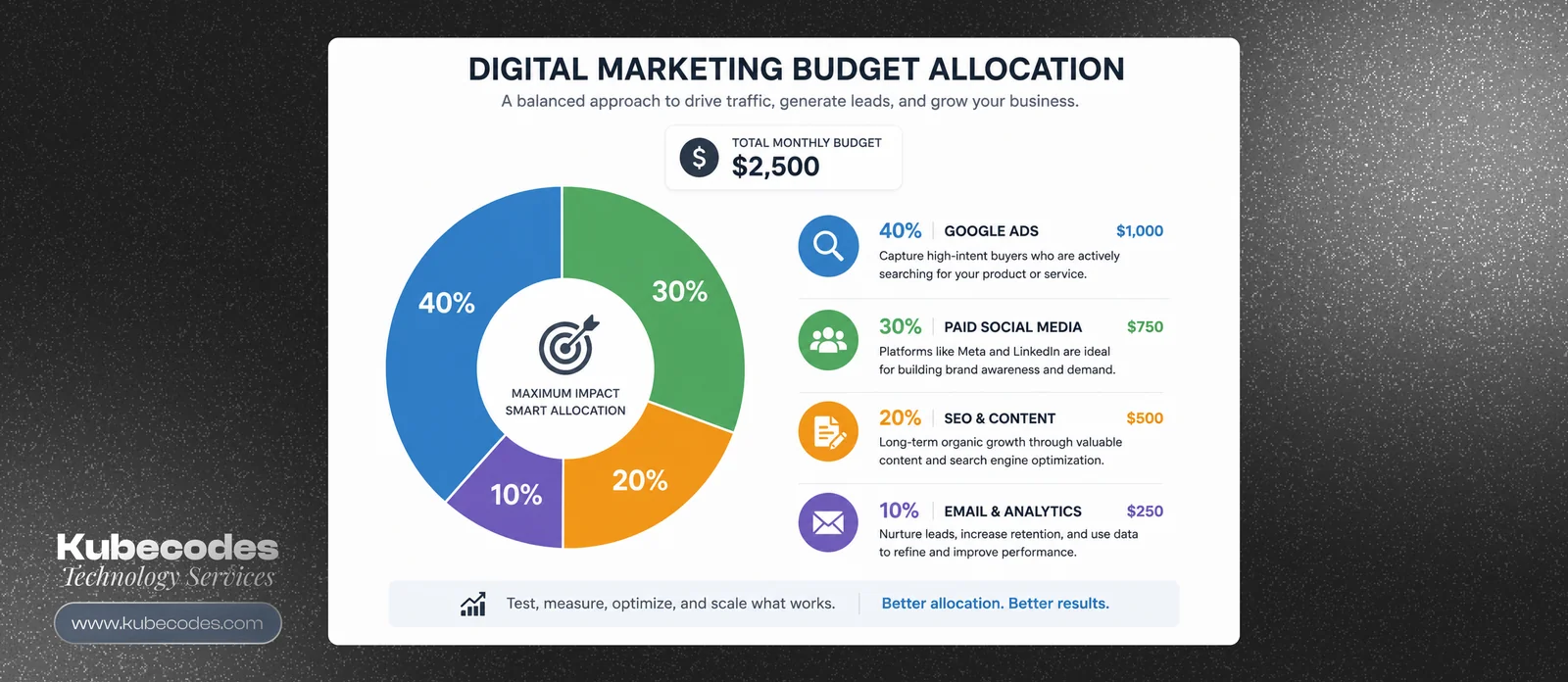
A $2,500 monthly budget can support a balanced strategy, but it should not be divided mechanically. The right allocation depends on the business model, existing assets, competition, and goals.
For a company that has a functioning website and needs both immediate demand and long-term visibility, Kubecodes may begin with this model:
| Channel | Monthly allocation | Share | Purpose |
|---|---|---|---|
| Google Ads | $1,000 | 40% | Capture people actively searching for the product or service |
| Paid social media | $750 | 30% | Build awareness and reach defined audiences |
| SEO and content | $500 | 20% | Create long-term organic visibility |
| Email marketing and analytics | $250 | 10% | Nurture leads, improve retention, and measure performance |
Google Ads: $1,000
Google Ads receives the largest share because search campaigns can reach people who are actively looking for a related product or service. This makes paid search valuable for local services, urgent needs, and high-intent commercial searches.
However, the campaign should focus on qualified demand. Broad keywords can consume the budget quickly. Therefore, the agency must manage search terms, locations, negative keywords, landing pages, and conversion tracking carefully.
Paid Social Media: $750
Meta and LinkedIn can help businesses reach audiences based on demographics, interests, professional characteristics, behaviour, or previous interaction.
For ecommerce and visual brands, Meta can introduce products before customers search for them. It can also retarget people who viewed a product or visited the website.
Meta platforms help businesses reach people based on audience signals and campaign goals. Meta’s audience targeting tools can help advertisers reach users who may be more likely to respond.
Also, LinkedIn targeting can help B2B advertisers reach audiences using professional details such as industry, company, job title, and skills. Yet LinkedIn advertising can be expensive. A smaller budget may work better through organic founder content and direct outreach.
SEO and Content Marketing: $500
Paid campaigns stop producing traffic when the budget stops. SEO and content can create longer-lasting visibility.
A company may use this budget for technical improvements, service-page optimization, local SEO, search-focused articles, internal linking, and content updates.
The budget is modest, so priorities matter. Publishing weak articles every few days would not help. One useful pillar page and several connected supporting articles may create greater value.
SEO works best when content is built for real readers. Google’s guidance on people-first content recommends producing useful information based on genuine knowledge and experience.
Email Marketing and Analytics: $250
Email helps businesses follow up with prospects, recover abandoned interest, educate customers, encourage repeat purchases, and stay visible after the first interaction.
Analytics ensures that the company can see what is working. This category may cover email software, automated sequences, reporting, call tracking, dashboard setup, or conversion review.
The allocation is an example rather than a universal formula. A company with no website may need to invest in its foundation first. A mature ecommerce brand may spend more on retention. A high-value B2B company may place more effort into outreach and content.
Which Marketing Channel Should You Choose First?
There is no single best marketing channel for every new business. The choice depends on how customers discover the offer, how quickly they need it, how visual the product is, and how much money is available.
Choose Google Ads for Local Services or Active B2B Demand
Google Ads may be the strongest starting point when people already search for the service. This includes businesses such as:
The key advantage is intent. The person is already looking. Still, high intent creates competition. The website, offer, location targeting, and tracking must be ready before the budget increases.
Choose Meta Ads for Ecommerce or Visual Products
Meta platforms may be more suitable when products benefit from discovery and visual presentation.
Examples include:
Customers may not search for the exact product yet. A strong image or video can create interest.
Meta also supports retargeting and audience expansion. However, success depends heavily on creative quality. One advertisement cannot run forever and politely generate revenue while everyone ignores creative fatigue.
Choose LinkedIn and Cold Outreach With No Advertising Budget
A company with no paid budget can still begin marketing. For B2B businesses, founders can use LinkedIn, email, networking, referrals, and direct outreach to reach specific buyers.
The process requires time rather than media spend. It also requires research. Generic messages rarely work. The outreach should explain why the offer matters to that person or company. This approach helped Kubecodes support an e-commerce business that began with no marketing budget.
How a Zero-Budget Ecommerce Project Found Its First Sales
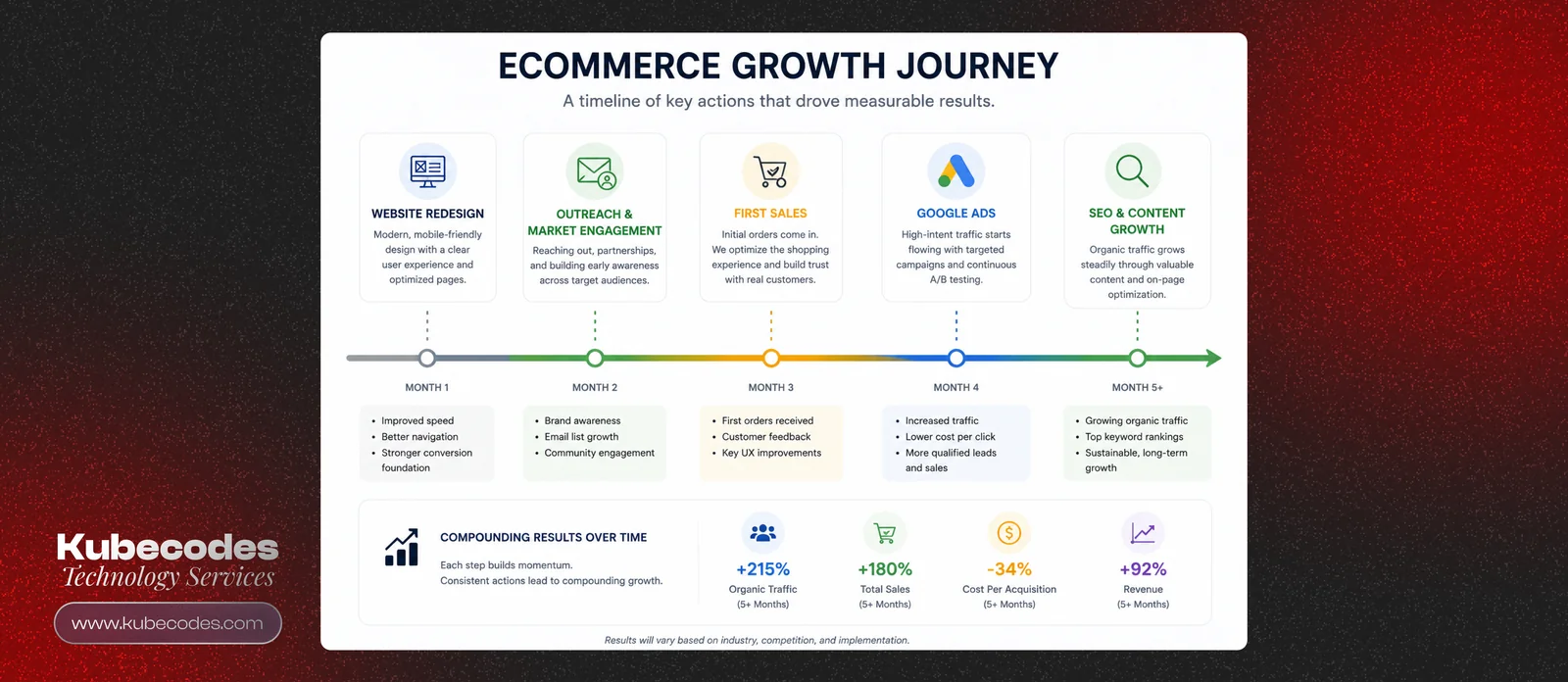
One of the most useful projects in Kubecodes’ early experience involved an e-commerce company selling dental equipment and disposable products.
When the work began, the website had several problems. Its design did not support conversion, the customer journey lacked clarity, and the company had little activity on social media. Normally, a business in that position might redesign the site and then launch advertising.
There was one problem: the marketing budget was zero.
Instead of waiting for advertising money to appear through some unexplained act of corporate magic, we focused on the assets and time available.
First, the website was redesigned into a clearer ecommerce experience. The products, navigation, calls to action, and buying process received attention. Social accounts were then established to create a consistent digital presence.
Next, we identified groups that could use the company’s products. The audience included dental clinics, laboratories, and restaurants that needed disposable supplies.
We began direct outreach to those businesses.
The first weeks required patience. Cold outreach rarely produces a dramatic result after a handful of messages. Lists need refinement. Messages need testing. Follow-up matters.
After roughly two months, the business began receiving results and generating website sales.
Once revenue started coming in, part of it could support Google Ads and SEO. The company moved from a zero-budget outreach strategy toward a broader marketing system.
The experience reinforced two important lessons.
First, the best channel depends on the resources available. A company with no advertising budget should not behave like one with $20,000 to spend.
Second, accurate audience selection can shorten the path to results. The company did not need to reach everyone. It needed to reach businesses with a practical reason to purchase the products.
That project also changed how we think about early-stage marketing. Constraints are inconvenient, certainly, but they often force better decisions.
Businesses Often Need Awareness Before More Marketing
Businesses do not always need more marketing. They often need more awareness.
The distinction matters.
More marketing means increasing activity. More awareness means reaching the right people with a message they understand and remember.
A company can publish daily without building awareness. It can run ads that people scroll past. It can send emails that provide no reason to care.
Awareness comes from clarity and repetition.
The audience must understand:
- What the company offers
- Who the offer is for
- Which problem it solves
- Why the business is credible
- What makes the choice different
- What action to take next
If the message changes every week, the audience has little chance to remember it.
A digital marketing agency should help the business establish a clear position before creating large volumes of content. That message should then appear consistently across the website, advertising, social media, search results, email, and sales conversations.
Why Daily Social Posting Is Overrated
Here is an unpopular opinion:
Around 90% of small businesses should stop trying to publish original social media content every day.
Daily posting sounds disciplined. In practice, it often creates rushed content, inconsistent quality, and significant demands on the owner’s time.
The company posts because the calendar says Tuesday, not because it has something useful to communicate. For many small businesses, three strong pieces of content per month can create more value than 30 weak posts.
Those stronger pieces can then be:
- Published on the website
- Shared across several social platforms
- Turned into a short video
- Included in an email
- Used by the sales team
- Promoted with paid media
- Repurposed into smaller posts
- Updated when new information becomes available
This does not mean social media is useless. It means posting frequency should not become the main measure of progress.
A local restaurant, visual brand, media company, or creator-led business may benefit from frequent posting. A specialized B2B supplier may not.
The strategy should match the buyer. Businesses should focus on content that supports a decision. That may include demonstrations, comparisons, case studies, customer questions, educational videos, founder opinions, before-and-after examples, or useful industry explanations.
Activity is easy to count. Influence is harder. The agency should care about the second one.
How to Review an Agency’s Past Work
Case studies should explain more than the final result.
A useful case study includes:
- The client’s original problem
- The market or audience
- The starting condition
- The strategy
- The work completed
- The timeline
- The challenges
- The outcome
- What the agency learned
Percentages alone can mislead. A 200% increase may sound impressive, but the starting number matters. Moving from one monthly lead to three is technically a 200% increase. The arithmetic is correct. The business impact may still be limited.
Ask the agency whether it can show examples related to your challenge. For example, a company that needs a website and paid advertising should examine projects where the agency handled both. A B2B company should look for evidence that the agency understands longer sales cycles and qualified lead generation.
You should also review the work directly. Visit the websites. Read the content. Check whether the messaging is clear. Look at the mobile experience. Ask how much of the final result the agency actually completed.
Some case studies include branding, development, advertising, and photography created by several separate teams. That is acceptable, but the agency should explain its role.
What Should a Digital Marketing Proposal Include?
A proposal should make the working relationship easier to understand.
- At minimum, it should explain:
- The business problem
- The recommended strategy
- The services included
- The expected deliverables
- The timeline
- The responsibilities of both teams
- The monthly or project cost
- The advertising budget
- The reporting process
- The performance indicators
- The account ownership structure
- The cancellation terms
- What is not included
The proposal should distinguish service fees from media spend. If the client pays $2,500 per month, it should be clear how much goes to the agency and how much goes directly to advertising platforms.
It should also state who owns the website, creative files, ad accounts, data, and analytics setup. Ideally, the business owns its core accounts and gives the agency access. That makes future transitions easier and protects historical data.
Be cautious when a proposal uses broad phrases such as “ongoing optimization” without defining the work. Optimization may include search-term reviews, creative testing, landing-page changes, bid adjustments, audience testing, reporting, or content updates.
How Should an Agency Report Results?
Reports should help business owners make decisions. A useful report explains:
A collection of screenshots is not a strategy report.
The agency should connect platform data to business outcomes whenever possible. For paid search, that might include leads, sales, conversion rate, cost per conversion, search terms, and budget use.
For SEO, the report may include organic clicks, impressions, search queries, conversions, ranking trends, technical work, published content, and future opportunities.
For social media, relevant measures depend on the objective. Awareness campaigns may examine reach, video views, engagement, and website visits. Sales campaigns should examine purchases, leads, revenue, and cost.
The agency should also identify uncertainty. If conversion tracking broke for part of the month, the report should say so. If a campaign produced leads but the sales team did not record outcomes, that limitation should be visible.
Honest reporting builds trust. Perfect-looking reports usually mean the uncomfortable parts have been carefully escorted out of the room.
Agency, Freelancer, or Internal Employee?
Each option can work. The best choice depends on budget, workload, required skills, and management capacity.
| Option | Main strengths | Possible limits | Best fit |
|---|---|---|---|
| Digital marketing agency | Broader skills, systems, capacity, and strategy | Higher cost than a single freelancer | Businesses needing several connected services |
| Freelancer | Lower cost, direct communication, specialist skill | Limited capacity and narrower expertise | A defined project or one marketing channel |
| Internal employee | Deep business knowledge and daily availability | Salary, hiring time, benefits, and limited individual skill range | Companies with consistent ongoing workload |
| Hybrid model | Internal knowledge plus external specialist support | Requires clear roles and communication | Growing companies with an internal coordinator |
An agency can provide strategy, design, content, advertising, development, and analytics through one relationship. That can reduce coordination work.
A freelancer may be better when the business knows exactly what it needs. For example, an experienced Google Ads specialist may manage one account effectively without a full agency.
An internal employee works closely with the company. However, one person rarely performs every part of digital marketing at an expert level.
Many growing companies use a hybrid model. An internal marketing coordinator manages brand knowledge and approvals, while an agency handles specialist work.
What Are the Main Agency Red Flags?
Pay attention to how the agency behaves before the contract begins.
Warning signs include:
Another warning sign is a lack of questions. An agency cannot understand the audience, offer, timeline, sales process, and market without asking. Confidence is valuable. Curiosity is essential.
What Are the Green Flags?
A trustworthy agency usually behaves differently. It asks specific questions before recommending a plan. It explains the limits of each channel. It separates short-term tactics from long-term growth. It discusses tracking early and defines success clearly.
Positive signs include:
The agency should also be willing to say no. It may advise against an unnecessary platform, a premature campaign, or an unrealistic publishing schedule. That honesty can protect the client’s budget and time.
Why Kubecodes Starts With the Business
Kubecodes does not begin with a fixed marketing package.
We begin by understanding the project, goals, audience, budget, timeline, and current assets. Then we review how the business attracts attention, builds trust, converts visitors, and follows up with potential customers.
This approach matters because companies at different stages need different plans.
A new B2B business with no media budget may need outreach, a clear website, and founder-led content. A local service may need Google Ads and local SEO. An ecommerce company may need stronger product pages, Meta creative work, email automation, and search campaigns.
The work should reflect the business rather than the agency’s favourite channel.
After working with more than 40 businesses, we have learned that protecting the client’s time is part of producing results. A strategy should reduce confusion, create clear responsibilities, and give the owner useful information.
Marketing should not become another full-time job for the client.
How Should You Make the Final Decision?
Do not choose an agency based on one impressive promise. Compare the teams using the same criteria.
| Evaluation area | Questions to consider |
|---|---|
| Understanding | Does the agency understand the business model and audience? |
| Strategy | Can it explain what should happen first and why? |
| Experience | Has it solved related problems before? |
| Communication | Are its answers clear, direct, and useful? |
| Measurement | Does it connect marketing activity to business outcomes? |
| Transparency | Are costs, ownership, and deliverables clear? |
| Expectations | Does it discuss timelines and risks honestly? |
| Capacity | Can the team complete the proposed work properly? |
| Trust | Would you feel comfortable sharing business data and challenges? |
| Value | Does the plan justify the cost and time required? |
You do not need the largest agency. You need a team that understands your current stage and can build the next stage responsibly.
Before signing, make sure you understand:
Frequently Asked Questions
01 – How much does a digital marketing agency cost in Vancouver?
The cost depends on the services, agency experience, advertising budget, competition, and project scope.
A small company may pay for one focused service, while a larger business may need SEO, advertising, content, web development, analytics, and creative support.
Request a proposal that separates agency fees, software costs, production expenses, and advertising spend.
02- How long does digital marketing take to generate results?
Paid campaigns can begin generating traffic soon after launch. However, reliable evaluation requires enough clicks, leads, and sales data.
SEO and content usually require more time because search visibility develops gradually. Outreach and email may create faster conversations, but results depend on list quality, messaging, offer, and follow-up.
03- Can a digital marketing agency guarantee sales?
No responsible agency can guarantee sales without controlling every part of the business. Sales depend on the offer, pricing, demand, competition, website, sales process, follow-up, inventory, customer service, and marketing.
An agency can provide a strategy, execute campaigns, test improvements, and report performance. It should not promise certainty where none exists.
04- Should a small business hire an agency or a freelancer?
A freelancer may suit a business that needs one defined skill, such as web design, writing, or Google Ads management. An agency is usually more suitable when several areas must work together, such as website development, SEO, advertising, content, analytics, and conversion optimization.
05- Which digital marketing channel should a new business start with?
Choose based on the business model. Local services and businesses with active search demand may begin with Google Ads. E-commerce and visual brands may benefit from Meta. B2B companies with no advertising budget may start with LinkedIn, direct outreach, partnerships, and referrals.
06- How much should a small business spend on digital marketing?
The budget should reflect revenue, margins, growth goals, competition, and available cash. A business should not copy another company’s budget without considering its own customer value and sales process.
Start with an amount that allows meaningful testing without threatening normal operations.
07- What services should a digital marketing agency provide?
Services may include strategy, SEO, paid advertising, social media, content, email marketing, analytics, web development, conversion optimization, branding, and reporting. The agency does not need to provide everything. It needs to provide the right combination for the client’s goals.
08- How can I tell whether my agency is producing real results?
Define success before the work begins. Review qualified leads, sales, revenue, conversion rates, acquisition costs, and customer quality. Use traffic, clicks, rankings, impressions, and engagement as supporting information.
Your agency should explain how its work connects to commercial outcomes.
Stop Paying for Clicks That Do Not Buy
Choosing a Digital Marketing Agency in Vancouver should not begin with the longest service list or the boldest guarantee. It should begin with your business.
The right team will understand your audience, review your current foundation, identify the most useful channels, explain the risks, and create a clear measurement plan. It will also protect your time.
Businesses can recover from a disappointing advertising month. Recovering from a year of broken tracking, weak systems, and unclear strategy is much harder.
Kubecodes works with businesses that want connected digital marketing rather than disconnected activity. We review the website, audience, offer, traffic sources, conversion path, and follow-up process before deciding what should happen next.
Stop paying for clicks that do not buy. Let’s fix your digital marketing.